- Edgevanta Weekly
- Posts
- Keep Them Guessing: How to Camouflage Your Bids
Keep Them Guessing: How to Camouflage Your Bids
Your essential guide to dominating the civil construction world with the latest tech, market trends, and wisdom.

Tristan Wilson
March 13, 2026
TL;DR: We lost a $16 million interstate job to a competitor who had never bid that type of work — and it changed everything about how we approached bidding. Most contractors are far more predictable than they think. Here's how to fix that.
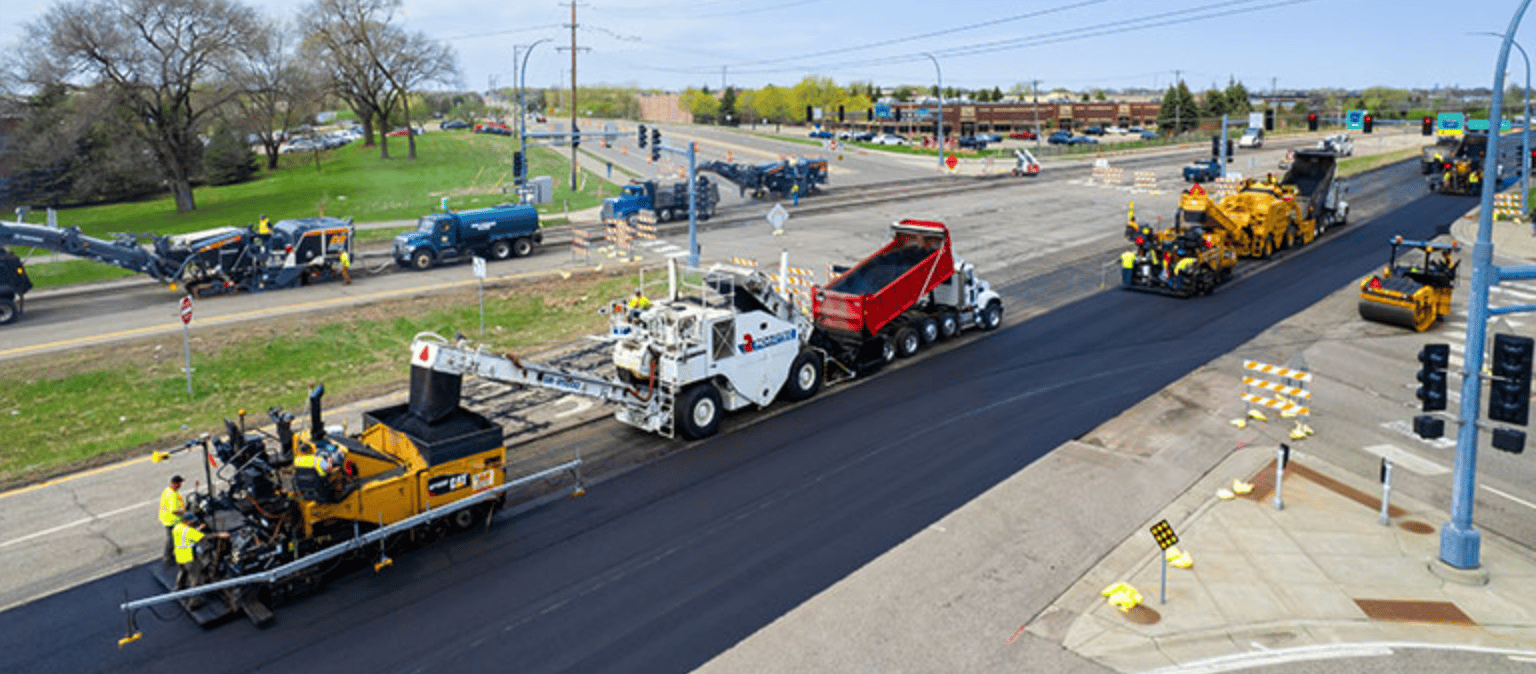
We needed 100,000 tons of interstate work. It would have made our year.
The job was exactly the kind of work we were great at. We had the plant, the crews, the history. We were tracking two competitors we respected. On bid day, a third showed up — a company that had never bid that type of work in our market.
They beat us by 1% on $16 million.
It freaking stung.
Worse? They did a great job on the project. They got good at that type of work. Fast. So not only did they take the job — they took a foothold in our backyard.
That loss forced us to look in the mirror. What was going on?
The answer was uncomfortable: we had become too predictable.
The SOP Trap
For years, we bid work the same way every time. And it worked. I got all my self-perform items right. I put the right money into mob and traffic control the way I was trained, the way our company had done it for 15+ years. I took everything off down to the striping and silt fence. If the owner consistently overestimated an item or two, I'd do my takeoff and move the value of whatever quantity I thought we'd actually do into mob, then bid those overestimated items at nothing. I picked the low vendor and sub quotes. For sub items, 99% of the time I put no markup on their numbers. I auto-adjusted to round dollar amounts. I made sure I had three sevens in the bid. I like 7s. My lumps ran at 8-10%. Very consistent.
And I won a lot of work at good margins. Very consistent ones.
That was our SOP. Until the $16 million interstate job proved our consistency was a liability.
What happened was simple. A competitor got acquired by a larger, more sophisticated company that analyzed their competition deeply. They taught the estimators at the newly acquired company how to study bid tabs. How do I know? Because they started kicking our ass. Beating us by 2-3% on what felt like every job. Taking work near our asphalt plant. Winning jobs we thought we had locked up.
They could predict us because we gave them every reason to.
Photo Credit: BitRoads
How Predictable Are You? More Than You Think.
Here's what keeps me up at night — in a good way. I recently ran a forecast model on a random state DOT, across a random group of jobs — weighted average, quantity banded, regionally focused, using similar historical bids — and got within 7% of the projected low bidder in aggregate. One $25 million job came within 1% of the final bid price.
Sometimes the model misses because a job is unique or the competitive dynamics are unusual. But imagine what that accuracy looks like with fine-tuning over time. Imagine what your direct competitor — the one who's been collecting your bid tabs for years — can do with that same approach dialed into your numbers specifically.
If I can get that close from the outside, they can get closer from the inside.
The Counterattack
After that interstate loss, we went to war. We poured over their bid tabs. We forecasted every one of their bids and graded ourselves on how close we could get to their number. Weighted averages. Regression analysis. We turned our estimators into analysts. Into business people.
After about a year of this, we got to a point where we felt comfortable we could predict their bid within 3%. And we started to fight back. We started winning again.
But here's the part that changed everything for me: as soon as we cracked their code, I realized they had probably cracked ours too. If we could forecast them, they could forecast us. We were just as predictable as they were.
So we changed.
Scramble the Signal
We started intentionally moving our prices around. Not randomly — strategically. The goal was to make our historical bid tabs useless as a predictor of our next move.
On jobs we didn't want, we priced extremely high. Not by jamming everything into mob the way everyone does — that's predictable too. Doubled sub prices. Marked up small passthrough items big. Spread the markup across the entire bid in ways that would make no sense to anyone analyzing our tabs afterward, without breaking the specs.
On a heart-attack job with night work and LDs? I had no problem pricing at 30 or 40% margin. Why? Because the message I wanted to send to the market was: "This job stinks and I want no part of it." But the secondary effect was even more valuable — it poisoned the dataset. The next time that competitor ran their model on us, our historical pricing was all over the map.
Then when we came in tight on a job we actually wanted, their model broke.
I once heard a contractor say, "I want all my competitors to think I have way too much work to handle or to think I'm going broke." Very few people do this because it's socially weird to have your numbers far from the pack. But that's exactly why it works.
Why This Matters More Now
AI is going to handle a lot of the estimating drudgery — finding bids, collecting quotes, takeoffs, spec review, bid creation, addenda tracking. That work is getting automated fast. The remaining work will be sequencing, strategy, partnering with subs and suppliers, and pricing. Public competitive unit price bidding isn't going anywhere. Which means the strategic game of how you price is about to become the entire game.
The contractors who are still bidding on autopilot — same mob percentage, same sub handling, same rounding habits, same tendencies job after job — are going to get eaten alive by competitors who study their tabs and exploit the patterns.
Every Bid Is a Message to the Market
You don't have to camouflage every bid. But you should be intentional about every one.
When you price a job you don't want, you're not just passing — you're writing a line of code in your competitor's model. Make sure that line of code is garbage. Move money around. Mark up small items. Price high in ways that look different from the last time you priced high.
When you price a job you want, you've already scrambled their ability to predict you. Now your real number is invisible.
The contractor who bids the same way every time is the contractor whose competitor knows their number before they submit it. Don't be that contractor.
Mix it up. Keep them guessing. Make your bid tabs tell a story that nobody can read.
In Case You Missed It:
How would you describe today's newsletter?Leave a rating to help us improve the newsletter. |
Enjoyed this newsletter? Forward it to a friend and have them sign up here!

Tristan Wilson is the CEO and Founder of Edgevanta. We make AI agents for civil estimating. He is a 4th Generation Contractor, construction enthusiast, ultra runner, and bidding nerd. He worked his way up the ladder at Allan Myers in the Mid-Atlantic and his family’s former business Barriere Construction before starting Edgevanta in Nashville, where the company is based. Reach out to him at [email protected]