- Edgevanta Weekly
- Posts
- The Friday Night We Got Wrong
The Friday Night We Got Wrong
Your essential guide to dominating the civil construction world with the latest tech, market trends, and wisdom.

Tristan Wilson
April 24, 2026
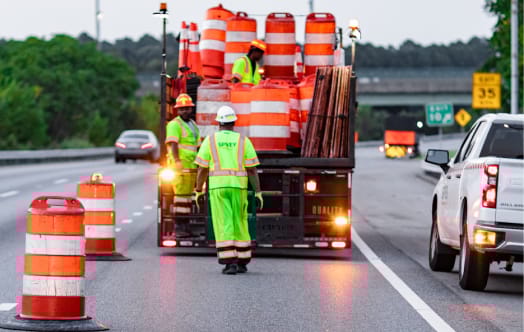
A National Work Zone Awareness Week essay
The parents got to the hospital first. Then the siblings. Four of our guys were being flown to the trauma center.
Our family's business, 2015. A Friday night on a four-lane divided highway.
Here's what actually happened.
Our foreman pulled his pickup onto the shoulder - outside the lane closure we had set up - with his flashing lights on so his crew could finish a crossover. They were almost done. Just one more thing. Get it buttoned up and go home.
A drunk driver came through at high speed and hit that pickup. Four of our guys were hurt. They all survived by God’s grace.
The driver was drunk. But looking back, I believe we were wrong.
The crew did exactly what they were told. They weren't the problem. We were. We put them in a position where a pickup truck with flashing lights was the only thing between them and a drunk driver on a Friday night. We had a proper lane closure set up a hundred feet away. We just needed five more minutes of work outside of it.
Nobody had ever told that crew, clearly and out loud, that work outside the closure doesn't happen - ever. That's on leadership.
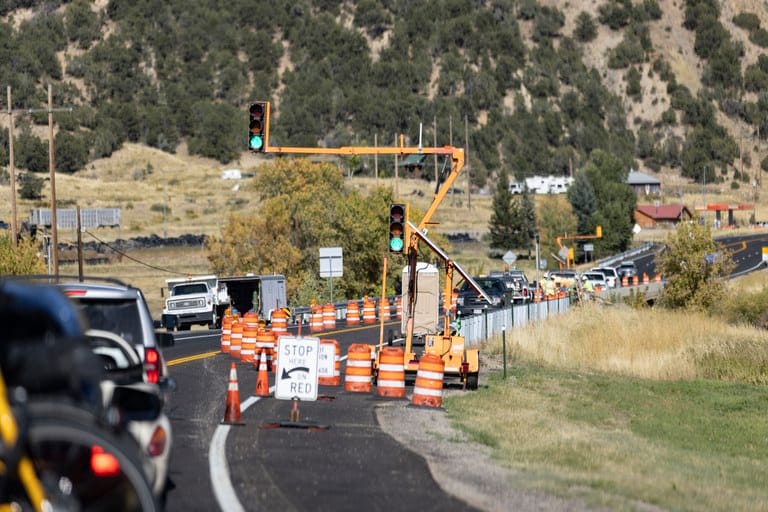
Photo Credit: CDOT
That's how it always starts.
You Can't Control the Driver. You Can Only Control the Zone.
Most work zone awareness messaging this week will ask the public to slow down. The public is who the public is. You can't control them.
You can only control the zone.
You can't control that a driver is drunk, distracted, tired, or looking at their phone. You can control whether there's a real lane closure or a pickup truck with flashing lights. Whether you're working Friday night at all. Whether a crash truck sits between your crew and traffic. Whether the person running the zone is qualified to run one. Whether you bid the job with what it actually takes to do it right.
The drunk driver was the final cause. We stacked the conditions.
The Standard: MUTCD, Then a Notch Higher
Start with the obvious. Do everything the spec and the MUTCD require. That's the legal floor and you don't negotiate on it.
Then step it up.
1. One person owns the traffic control on the job. Superintendent, foreman, traffic control foreman, dedicated TCS on a bigger job - I don't care what the title is. One person's name is next to it. They have stop-work authority. If they see something unsafe, they can shut it down without calling you first.
2. No vehicles substituting for a closure. Ever. A pickup truck with flashing lights is not a work zone. I know this because we learned it the hard way. If the work isn't inside a proper closure, the work doesn't happen. Come back tomorrow. Set it up right. No exceptions for "five more minutes."
3. Blue lights are your friend. Cops on every night job. Period. There is something about a marked unit with blue lights in your lane closure that keeps the public out like nothing else. Include it in your bid whether the owner pays for it or not. Carry the cost. If it puts you a hair over the low bid, so be it.
4. Crash trucks on every closure above 35 MPH. Not just the interstate. State highways, arterials, anywhere traffic is moving fast. On interstate work, cops AND crash trucks - both, not one or the other. On short arterial closures the engineer may push back. Push for it anyway. Make the case. The alternative is a crew with no buffer between them and a vehicle moving at highway speed.
5. Paint your tapers. Mark your Type III locations. Any closure up more than a day gets painted drum lines with proper spacing and marked Type III locations. When a drum gets knocked over at 2 AM, the replacement goes back in the exact right place. The setup should be reproducible by anyone, in the dark, in a rush.
6. Bring the field into estimating. Flaggers at intersections, driveway issues, sight distance problems — your field supervision sees these things before the bid. If your estimators are pricing traffic control without walking the job with the people who will run it, you're bidding blind on the item most likely to hurt somebody.
7. The closure gets checked every hour. A lane closure set up at 7 PM is not the same lane closure at 11 PM. Drums get hit. Signs drift. Arrow boards go down. The owner of the zone - the person from point 1 - or their designee rides the closure every hour, every shift. Dash camera running on the monitoring vehicle. Build a record. If something happens, you want to know exactly what the zone looked like - not guess.
8. Trust but verify. Ride your work zones as a leader. Especially new jobs. Especially at night. Don't take anyone's word for what the setup looks like. Go see it yourself. If you're the PM, the division manager, the CEO - you show up at 10 PM sometimes. Your people will tell you everything you need to know when you're standing in the zone with them.

Photo Credit: Spivey
The Friday Night Rule
After 2015, we made a rule: no lane closures on Friday nights.
It was controversial. We did it anyway.
Drunk driver risk on Friday nights is predictable and elevated. Same for after major sporting events. If the risk is higher and the reward is the same, the math is obvious.
We didn't lose work over it.
We sat down with our owners and told them what had happened. We told them why we weren't going to work Friday nights anymore. We just explained what we'd seen in that hospital and what we'd decided about it.
They got it. Most owners don't want somebody dying on their project any more than you do. The ones worth working for will hear you out and work with you. Make the case. Be clear about why. You'll be surprised how often the answer is yes.
"But My Competitor Won't Carry All That"
Right. They won't.
The move isn't to walk from the work. The move is to price the work correctly and stay in the hunt.
Carry what it takes to do it right. Carry the police detail. Carry the crash truck. Carry the person who owns the zone. Put those numbers in the bid. Then sharpen everywhere else - production, equipment utilization, overhead, schedule, indirect costs.
If you're consistently the high bidder after carrying real traffic control, the problem isn't the traffic control. It's somewhere else in your estimate. Find it.
The one thing you don't do is cut on the things standing between your crew and traffic.
Is it worth being low on a job and then having a drunk driver blow through your zone because you didn't carry a crash truck? Is it worth the phone call? Is it worth the waiting room?
You include what you need to do it right. Period.
The Close
The public is going to keep doing what the public does. Drunk drivers are not going to slow down because it's National Work Zone Awareness Week. Distracted drivers are not going to put their phones down.
Your job is to build a zone that works anyway to protect the ones who matter most.
That waiting room changed how I think about this industry. I hope this essay changes something for you before you ever see your own version of it.
Be safe out there.
In Case You Missed It:
How would you describe today's newsletter?Leave a rating to help us improve the newsletter. |
Enjoyed this newsletter? Forward it to a friend and have them sign up here!

Tristan Wilson is the CEO and Founder of Edgevanta. We make AI agents for civil estimating. He is a 4th Generation Contractor, construction enthusiast, ultra runner, and bidding nerd. He worked his way up the ladder at Allan Myers in the Mid-Atlantic and his family’s former business Barriere Construction before starting Edgevanta in Nashville, where the company is based. Reach out to him at [email protected]