- Edgevanta Weekly
- Posts
- What If You Knew What They Were Going to Bid?
What If You Knew What They Were Going to Bid?
Your essential guide to dominating the civil construction world with the latest tech, market trends, and wisdom.

Tristan Wilson
April 03, 2026

A contractor we work with sat down before bid day last month with something most estimators never have: a forecast of what their main competitor was likely to bid.
Not a guess. Not "I think they were around 8% high last time." A data-driven projection across multiple jobs totaling $19 million in work.
When the bids opened, those forecasts landed within 2% of the actual numbers.
The result: roughly $200,000 in additional profit they would have left on the table if they'd priced the way they always had.
Same estimator. Same takeoff process. Same cost estimates for every item. Same jobs.
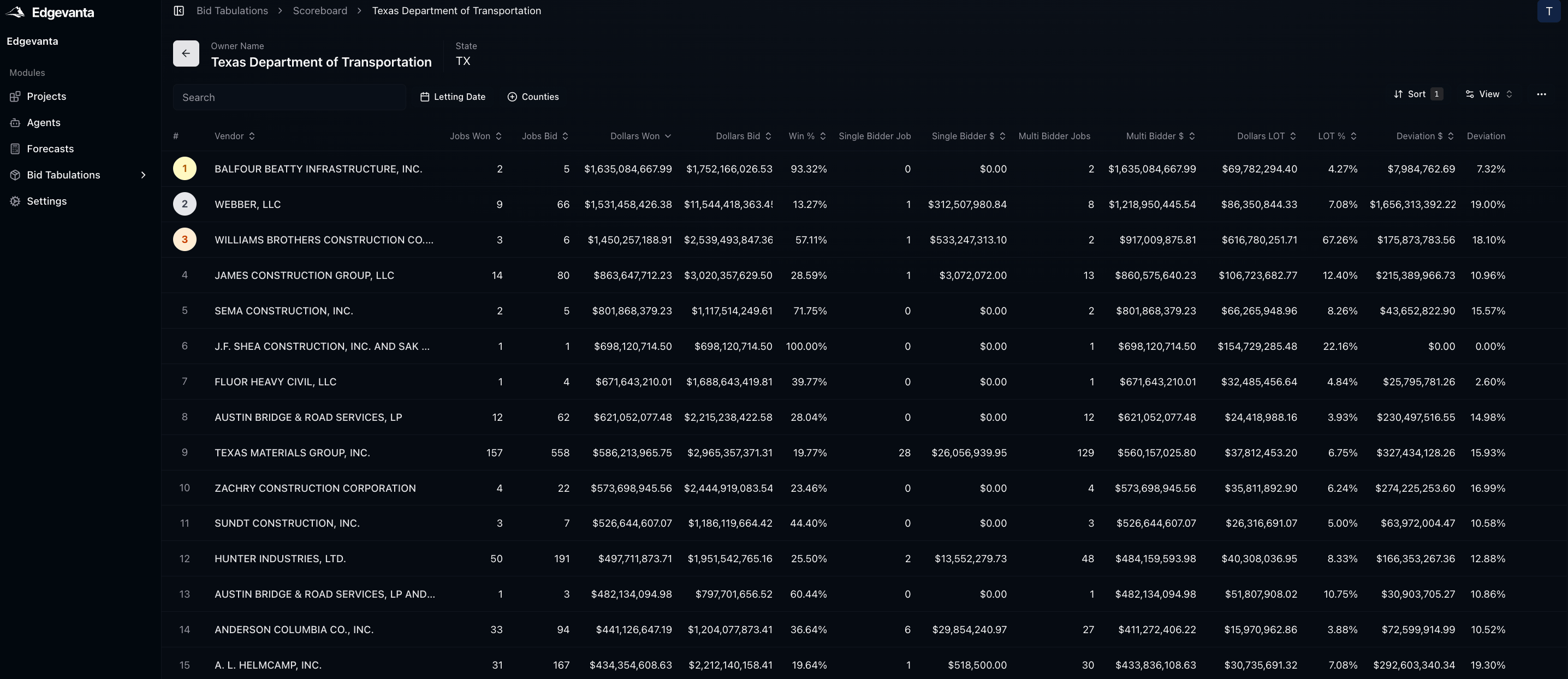
Benchmarking bid tab data from one of our 20+ state DOTs
What Actually Happened in the Bid Room
This contractor had been bidding against the same group of competitors for years. They knew their names. They had a general sense of who was aggressive and who wasn't. But "general sense" is a dangerous thing when you're making a pricing decision on a $6 million job.
What they started doing was studying the exposed patterns in historical bid tabs — pulled from DOT lettings across their state and organized by competitor, work type, and geography. Not filed in a drawer. Searchable. Updated.
The patterns showed up fast. Their main competitor had bid between 7% and 9% over their bid amounts on similar work in that geography for the past two years. On one job, the contractor had been planning to go in at 6%. They went 8%. Still won by a comfortable margin. On another, they held firm at a number they'd normally have second-guessed and shaved. The data told them they had room. They trusted it.
Small adjustments. Multiple jobs. $200K in aggregate profit they'd have surrendered under the old process.
That's not a technology story. That's a discipline story. The technology just made it possible to run the discipline fast enough to matter on bid day.
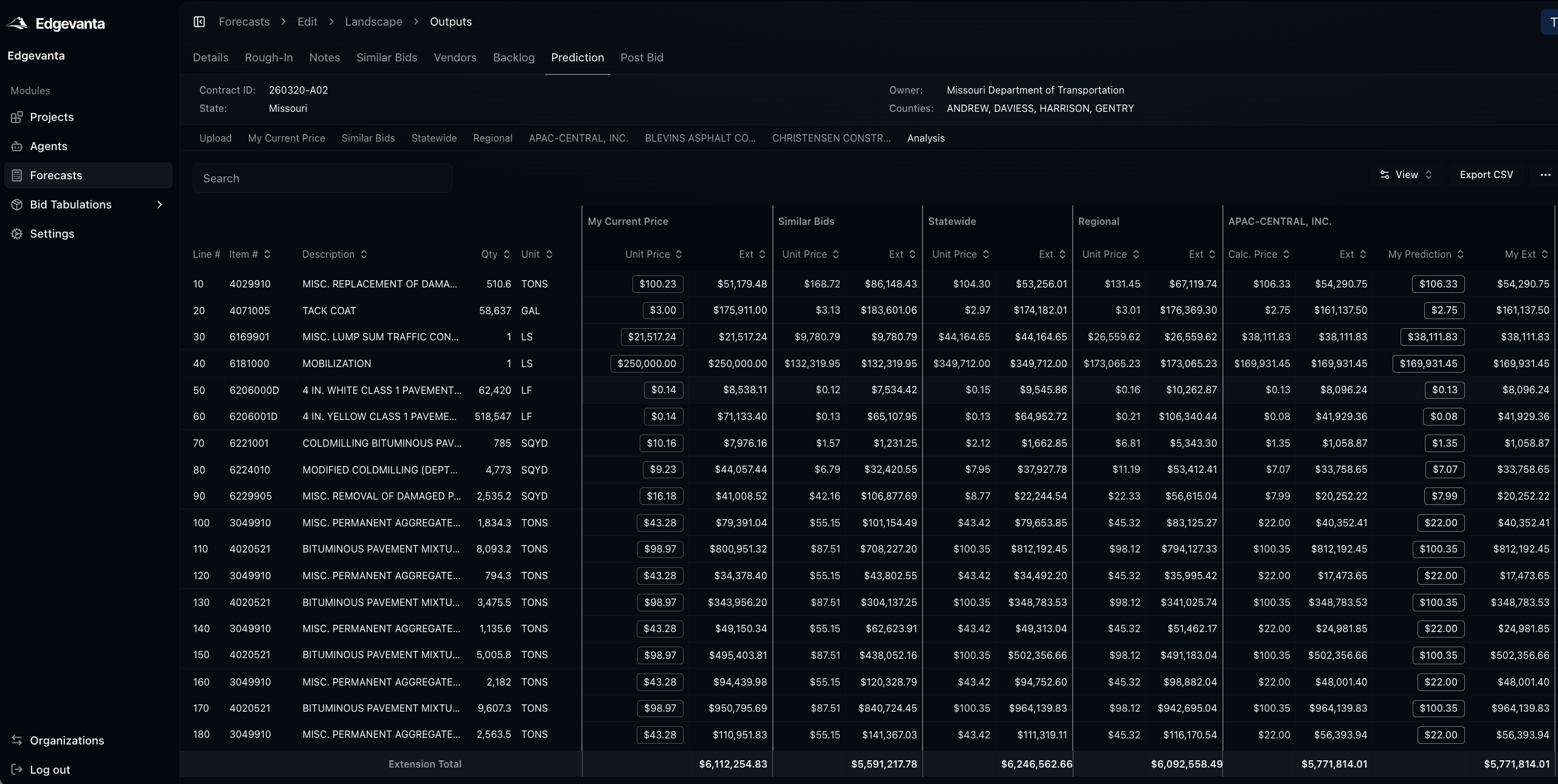
What it looks like when your bid room has real data in it (demo account built from public DOT data)
Last month an estimator on the platform pulled up a competitor he'd been losing to for three years, saw the pricing pattern laid out in front of him, and said, "So that's why we kept getting beat on bridge work."
$19 million in bids. 2% accuracy. $200K they'd have given away.
If you want to see what your competitive landscape looks like, reply to this email.
— Tristan
P.S. I recently told the origin story of how Edgevanta started on Founders Only - a $2.1M mistake, the family business, all of it.
In Case You Missed It:
How would you describe today's newsletter?Leave a rating to help us improve the newsletter. |
Enjoyed this newsletter? Forward it to a friend and have them sign up here!

Tristan Wilson is the CEO and Founder of Edgevanta. We make AI agents for civil estimating. He is a 4th Generation Contractor, construction enthusiast, ultra runner, and bidding nerd. He worked his way up the ladder at Allan Myers in the Mid-Atlantic and his family’s former business Barriere Construction before starting Edgevanta in Nashville, where the company is based. Reach out to him at [email protected]