- Edgevanta Weekly
- Posts
- How Often Do You Visit the Field?
How Often Do You Visit the Field?
Your essential guide to dominating the civil construction world with the latest tech, market trends, and wisdom.

Tristan Wilson
February 06, 2026

TL;DR: Field time isn't optional for people who manage construction work. Block a half day per week minimum. If your boss won't support this, that’s a problem.
Nobody is going to get to the end of their career and say, "I wish I had spent more time in the office."
Yet most construction managers spend 90% of their time behind a desk, managing spreadsheets instead of reality. I get it. Everybody is busy.
But this is insane.
I love asking executives, PMs, and estimators: "How often do you visit the field?"
The answer is almost always: "Not enough."

Photo Credit: E&B Paving
What You Miss From Behind Your Desk
When I first became a PM, I felt overwhelmed. Inbox piling up. Jobs getting started. I didn't prioritize field visits and it showed. Then a mentor challenged me to get in the field more. For years, I had a standing appointment every Friday - a field manager and I would drive around for half the day checking jobs, talking to crews, watching work.
Here's what I learned that I would have NEVER learned from my office:
We were bleeding people because of terrible weekend scheduling. We told crews Friday morning they'd work Saturday - less than 24 hours notice. People were quitting over it. Cost? Hundreds of thousands in turnover and morale. Fix? Simple policy requiring advance notice.
We were undertrucked on a major dirt job. I had picked a cheap pit 15 miles away. One field visit revealed we could DOUBLE production using a pit 3 miles away that cost $2 more per yard. Pay $100K more for material, save $300K in trucking and time. That's a $200K swing from one field visit.
Our best crew was measuring real-time GPS cuts against load counts daily, catching overruns or underruns immediately. This should have been standard practice across all dirt crews. One observation = company-wide improvement.
Three field visits. Collectively worth over $500K in saved costs and prevented losses.
How many meetings are worth that?
The Problem Isn't Time - It's Priorities
When I ask people why they don't visit the field, they say they're too busy.
Wrong.
You're not too busy. You won't say no.
No to the meeting that could be an email. No to the lunch that doesn't matter. No to the task that can wait.
Here's the math: That one-hour meeting costs you $0. Missing the $200K dirt pit decision costs $200K.
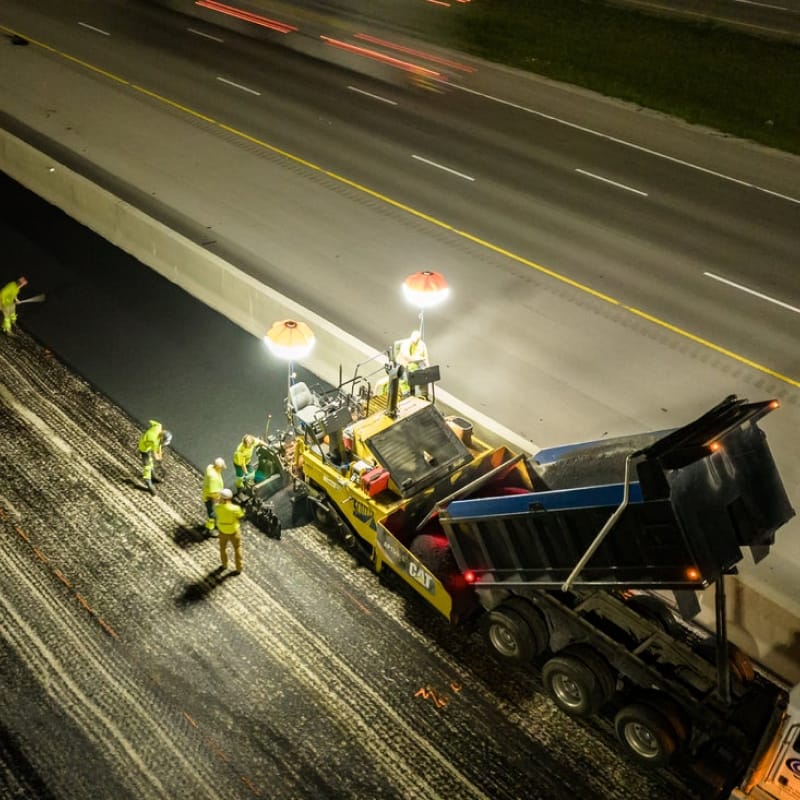
Photo Credit: Scotty’s Contracting & Stone
How to Make It Happen
Minimum commitment: Half day per week in the field if you're in management.
Block it on your calendar. Every Friday morning. Every Wednesday afternoon. Whatever works.
Treat it like your most important meeting - because it is.
"But I have conflicts!" Plan ahead. Give yourself the gift.
"But my boss schedules me for meetings!" If your boss won't support field time, go work somewhere else. Seriously.
"But I manage multiple remote jobs!" Visit one per week. Keep a rotation. You'll see each job monthly minimum. Job in trouble? Increase frequency. Running clean? Extend to six weeks.
"But I have office responsibilities only I can do!" Wrong. Contract reviews? Train your PM. Change orders? Your project engineer can handle it. Board meeting prep? Your assistant can draft it. If you think you're the only one who can do everything, you're the problem.
"Won't my superintendents think I'm micromanaging?" They'll be happy to see you. Show up consistently, ask good questions, listen more than you talk, and support their work. That's not micromanagement - that's leadership.
What to Do When You're There
You're not there to audit. You're there to understand and support.
Don't just drive through. Exit your vehicle. Shake hands. Talk to people.
Ask about the work:
How's it going?
What's the goal for today?
How are we getting paid?
Do you have what you need?
Ask about the people:
How's the family?
How's the rest of the crew doing?
What are you into - basketball, football, racing?
Find out what people care about. Remember it. Bring it up next time.
Construction is a people business. The best operators, foremen, and superintendents stay at companies where they feel seen and valued. You earn respect by showing consistency and that you care.

Photo Credit: BuildWitt (That’s a great person and loyal newsletter reader named Herb Sargent on the left!)
What to Do With What You Learn
Safety and quality issues? Address immediately with the superintendent on the spot.
Everything else? Email the project team within 24 hours. CC the PM, superintendent, and project engineer. Keep it to 5 bullet points max.
Start with the good. Then follow with what needs improvement.
Be specific. Not "morale seems low" but "crew mentioned they were short handed for 3 weeks."
Be the Truth Seeker
You'll visit a site and someone will tell you something that contradicts the reports.
The PM says production is on target. The crew says they're short on equipment and working 11-hour days just to stay close.
Don't ignore this. Dig deeper.
"Tell me more about that." "When did this start?" "What do you think we should do?"
Your job is to find the truth, not confirm what you already believe. Sometimes the crew is right. Sometimes the super is right. Sometimes they're both seeing different pieces of the same problem.
The Best Leaders Live Here
The best construction leaders I know prioritize field time. Not because they love being outside. But because they know the field is where you learn what's really happening.
They ask "How can we do better?" not from behind a desk, but standing next to the person doing the work.
That's how you raise the bar. That's how you never settle.
Your Move
You don't need permission. But here it is:
Block the time. Say no to everything else. Go.
The field is where the game is won or lost. The field is where you learn. The field is where your people are.
You'll never regret it.
Reader Spotlight: Bobby Steele
Met Bobby in Indiana this week. His team's motto hangs above their plan table: "Happily, Quickly, Completely."
Three words that capture everything about focusing on what you control - your attitude, your hustle, and your standards.
Good reminder that the best companies don't just talk about culture. They put it on the wall where everyone sees it daily.
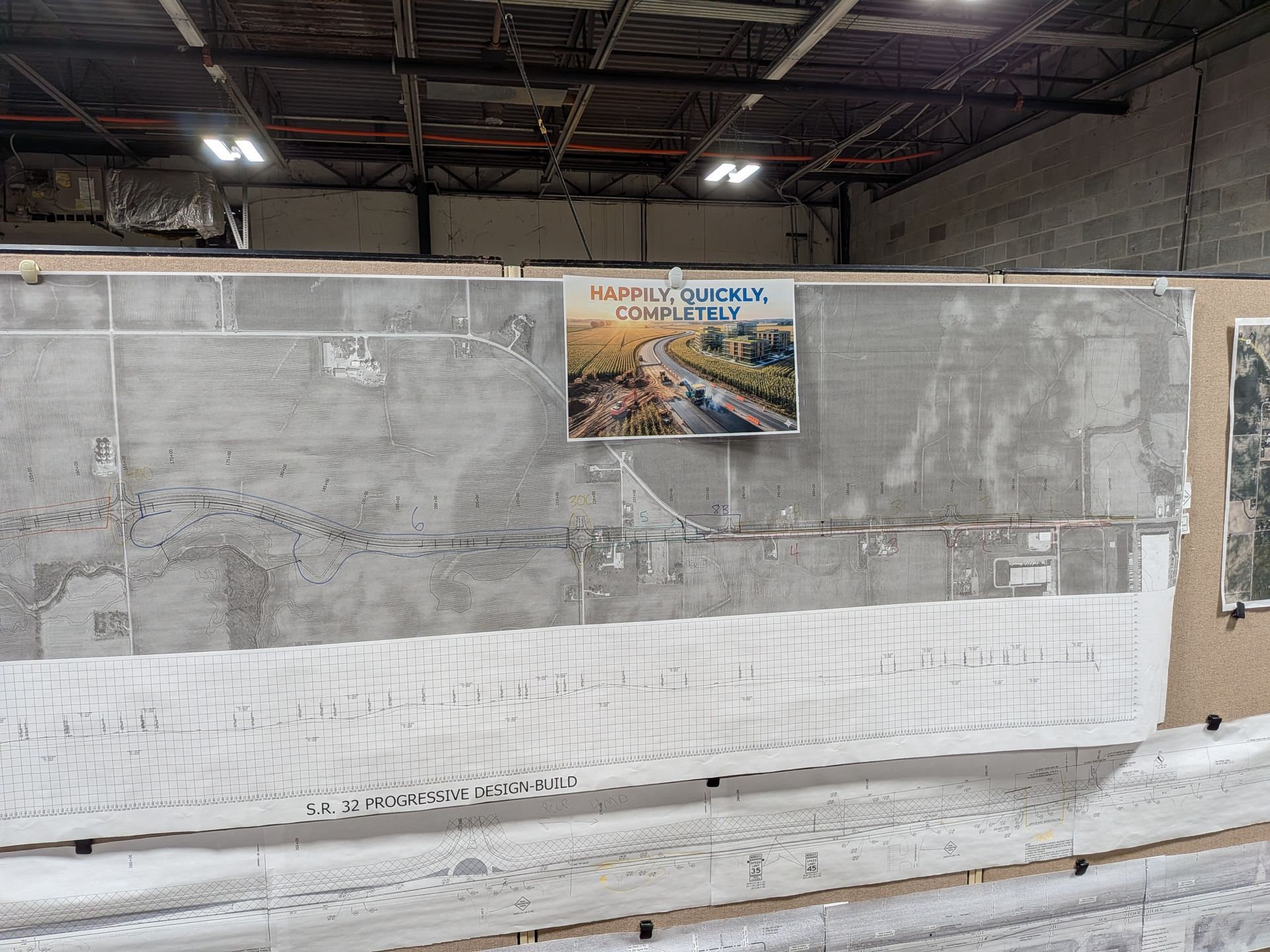
Want to be featured? Send me a photo of your desk setup or office slogan. Best ones get shared with 2,000+ contractors in a future newsletter.
In Case You Missed It:
How would you describe today's newsletter?Leave a rating to help us improve the newsletter. |
Enjoyed this newsletter? Forward it to a friend and have them sign up here!

Tristan Wilson is the CEO and Founder of Edgevanta. We make AI agents for civil estimating. He is a 4th Generation Contractor, construction enthusiast, ultra runner, and bidding nerd. He worked his way up the ladder at Allan Myers in the Mid-Atlantic and his family’s former business Barriere Construction before starting Edgevanta in Nashville, where the company is based. Reach out to him at [email protected]